A criminal trial follows a defined legal sequence that begins before jurors enter the courtroom. The prosecution must prove each charged offense beyond a reasonable doubt, while the defense tests that evidence. Both sides follow courtroom rules governing testimony, exhibits, objections, and arguments before a presiding judge. The stages below explain what defendants, witnesses, and jurors should expect as the case moves toward a verdict. This order helps the court assess evidence fairly before deciding a defendant’s guilt or innocence.
Before Trial Begins
Before the first witness testifies, a defendant often reviews the charge, potential defenses, and courtroom procedures with counsel. In serious cases, a person seeking guidance from a Los Angeles law firm can discuss arrest records, discovery, plea proposals, and trial strategy. Clear advice at this stage helps preserve rights and prevents avoidable surprises.
The judge handles preliminary matters before trial starts. These matters can include bail, scheduling, requests for documents, and motions about evidence. A defense lawyer can ask the court to exclude evidence obtained through an unlawful search or an improper interrogation.
The prosecution and defense exchange information under discovery rules. Records can include police reports, photographs, recordings, laboratory results, and witness statements. Each side reviews the available material, identifies weaknesses, and prepares questions for trial.
Jury Selection
Jury selection begins with questioning potential jurors. The judge and attorneys ask about employment, prior experiences, relationships, and opinions that could affect impartiality.
A juror can be excused for a stated reason, such as a clear conflict or inability to follow the law. Attorneys also receive a limited number of peremptory challenges, subject to restrictions against discriminatory selection.
The final jury takes an oath to decide the case based on the evidence presented in the courtroom. Jurors cannot research the case, discuss it outside deliberations, or form a final opinion before hearing all admitted evidence.
Opening Statements and Evidence
The prosecution gives the first opening statement because it carries the burden of proof. The attorney explains the alleged conduct and describes the evidence expected during trial. An opening statement is not evidence, and lawyers cannot testify through argument.
The defense usually gives an opening statement after the prosecution. Counsel can present a different account, discuss missing proof, or wait until later to explain the defense position. The defense does not have to present evidence or prove innocence.
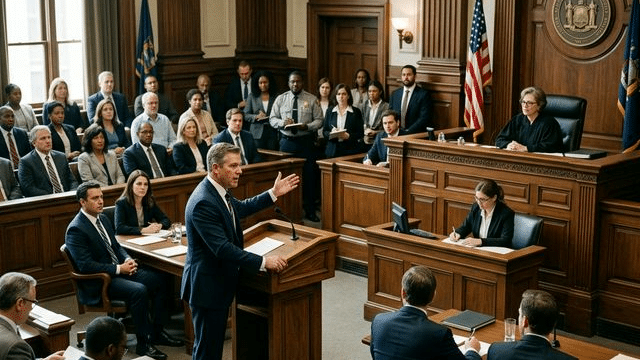
The prosecution then calls witnesses and introduces exhibits. Witnesses answer questions under oath, and defense counsel cross-examines them. Cross-examination tests memory, perception, consistency, possible bias, and the accuracy of earlier statements.
Witness Testimony and Objections
An attorney can object when a question violates an evidence rule. Common objections involve hearsay, speculation, leading questions, relevance, or unfair prejudice. The judge sustains or overrules each objection, and the ruling determines whether the witness answers.
The judge also decides whether an exhibit enters the record. A document, recording, or physical item generally requires a foundation showing what it is and why it relates to the case.
After the prosecution rests, the defense can ask the judge for an acquittal if the evidence cannot support a conviction. If that request fails, the defense may present its evidence, if it chooses. The prosecution then receives a chance to respond to new defense evidence.
Closing Arguments and Verdict
Closing arguments allow both sides to connect admitted evidence with the legal instructions. The prosecution explains why the evidence satisfies every element of each offense. The defense points to gaps, contradictions, unreliable testimony, or reasonable alternative explanations.
The judge then instructs jurors on the law. Instructions define the charges, the burden of proof, the presumption of innocence, and the rules for evaluating testimony.
Jurors deliberate privately and review admitted exhibits. They send questions through the judge and request clarification when an instruction or exhibit needs further review. In federal court and state felony cases, a guilty verdict generally requires a unanimous jury. If jurors cannot reach the required agreement, the judge can declare a mistrial.
Sentencing and Review
A guilty verdict does not always lead to immediate sentencing. The judge reviews the offense, the defendant’s record, applicable sentencing laws, and information presented by both sides. The sentence can include incarceration, probation, fines, restitution, or other court-ordered conditions.
A verdict of not guilty ends the charge because double jeopardy protections generally prevent a second prosecution for the same offense. A convicted defendant can appeal legal errors, such as an improper evidence ruling or an incorrect jury instruction. An appeal does not automatically guarantee a new trial.
Conclusion
A criminal trial moves through distinct stages, and each stage serves a different legal purpose. Evidence enters through approved procedures, witnesses face questioning, and jurors decide whether the prosecution met its burden.
Anyone facing charges should preserve documents, follow court orders, and discuss deadlines with a qualified criminal defense lawyer. Early preparation gives counsel time to challenge evidence, evaluate plea options, and build a trial plan based on the actual record.