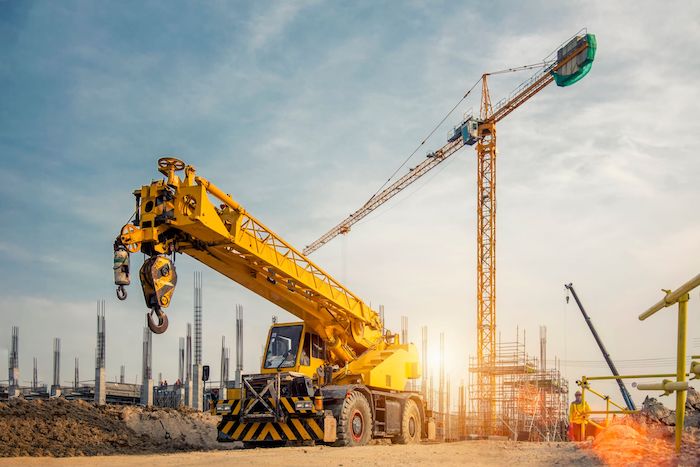
Sydney lifting jobs are rarely all the same. One project may need a compact crane for a tight city site. Another may need a Franna to move equipment across a yard. A larger job may need an all-terrain crane with greater reach and capacity.
Choosing the right cranes in Sydney should start with the lifting challenge, not just the crane name. The right crane depends on the load, access, reach, ground conditions, and how much movement is needed before the job is complete.
City Cranes Can Help Where Space Is Limited
City cranes are often useful when a project needs lifting power but does not have much room to work with. These jobs can happen in laneways, residential areas, compact commercial sites, schools, hospitals, apartment buildings, or inner-city construction zones.
Their value comes from being able to operate in tighter spaces where larger cranes may struggle to set up. That does not mean they suit every job. The load still needs to fit within the crane’s working limits, and the setup area must be safe and stable.
City cranes may be useful for:
- Rooftop plant lifts
- Small structural steel lifts
- Air-conditioning unit placement
- Building material handling
- Jobs with limited street access
- Short-duration urban lifts
The key question is not just “Can the crane fit?” It is also “Can the crane complete the lift safely from that position?” A small crane still needs enough reach, clearance, and ground support.
This scenario is where early details help. Photos of the site, load dimensions, and information about nearby obstructions can prevent the wrong choice. In tight areas, even a parked vehicle, low awning, or narrow driveway can change the plan.
A city crane can be a smart choice when the job needs careful lifting in a compact space, but it should still be selected through proper lift planning.
Franna Cranes Work Well for Pick-and-Carry Tasks
A Franna crane is often the better option when the job involves moving a load across a site rather than lifting from one fixed position only. This is called pick-and-carry work. The crane lifts the load and travels with it under controlled conditions.
That makes frannas useful on industrial sites, construction yards, infrastructure jobs, storage areas, and projects where equipment or materials need to move from one point to another.
A Franna crane may be suitable when teams need to
- Relocate machinery on-site
- Move materials between work zones
- Shift equipment without using multiple machines
- Support maintenance or shutdown work
- Handle loads where fixed lifting is less practical
The advantage is mobility. A franna can reduce the need to lift, place, reload, and move a load with another machine. That can save time and simplify the job.
Still, franna lifts need care. The travel route must be checked. The ground must be suitable. People and vehicles need to stay clear. The load must also be controlled so it does not swing or create risk during movement.
Frannas are not the answer to every lifting problem, but when the job needs controlled movement across a site, they can be very practical.
All-Terrain Cranes Suit Bigger or More Demanding Lifts
Some lifting jobs need more reach, more lifting capacity, or better performance across uneven ground. That is where all-terrain cranes are often used. They can be useful for larger construction, infrastructure, industrial, and regional jobs where smaller crane types do not provide enough capability.
All-terrain cranes are often considered when a project involves, heavy loads, longer reach requirements, uneven or mixed ground conditions, larger site layouts, higher lift points and more complex setup planning
These cranes can handle demanding tasks, but they also need more planning around access and setup. The team must confirm road access, ground bearing conditions, outrigger space, exclusion zones, and the lift radius.
The lift plan should also consider whether the crane needs permits, traffic management, or a larger work area. On busy Sydney sites, this needs to be organised early.
Choosing an all-terrain crane just because the load is heavy may not be enough. The crane must suit the whole job. That means checking where it can set up, whether it can safely reach the lift point, and how other site activity will be managed around it.
Conclusion
Different cranes solve different lifting problems. City cranes can help on tight urban sites. Franna cranes are useful for moving loads across a site. All-terrain cranes suit heavier, higher, or more demanding lifts.